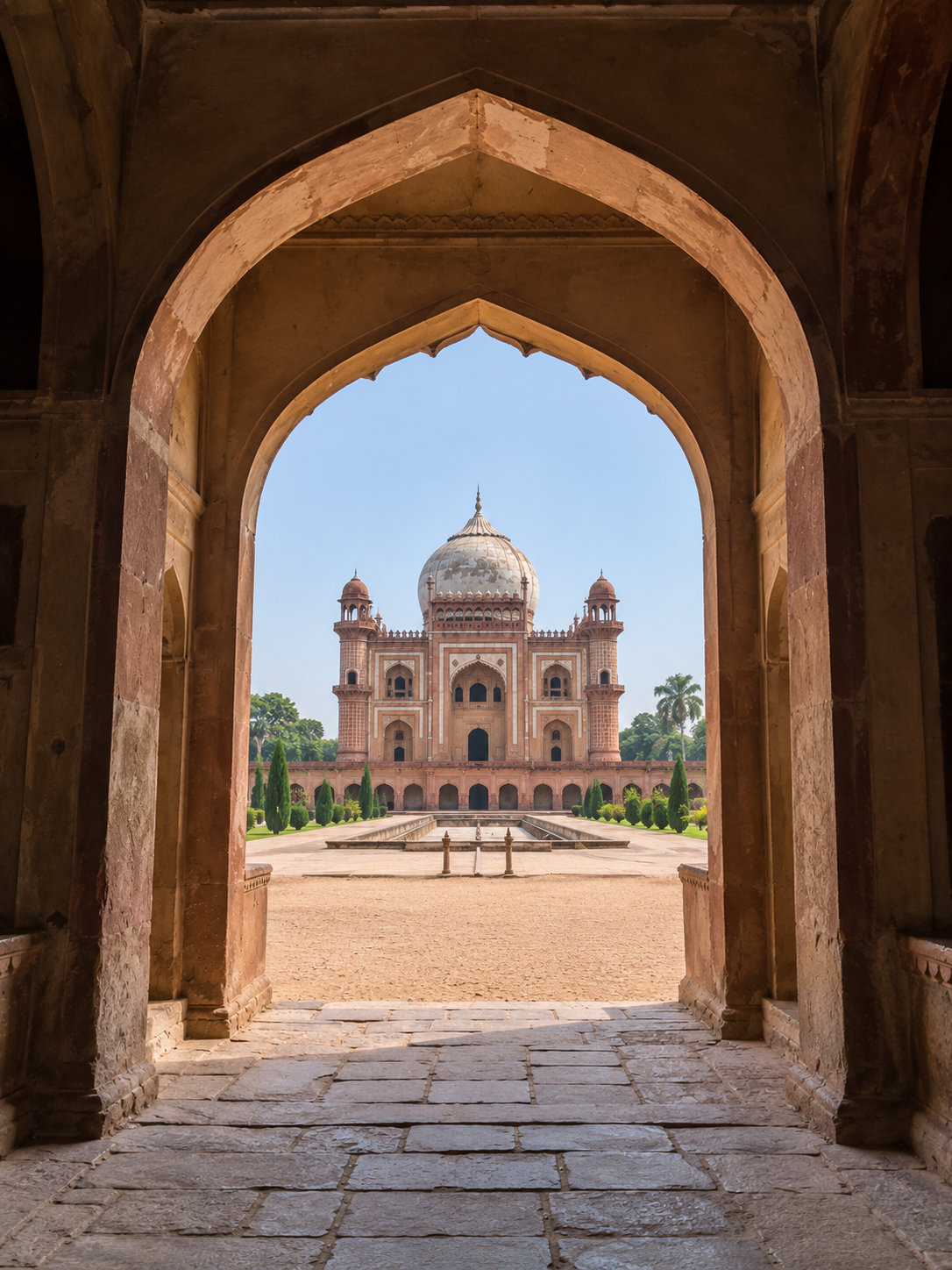
It is the finest monuments to explore through the lens of architectural and creative photography. Built in 1754, the mausoleum was constructed in memory of Safdarjung, a prominent statesman of the Mughal Empire. Often regarded as one of the last major garden tombs built in the Mughal architectural tradition, it offers photographers an opportunity to study the relationship between history, geometry, light, and space.
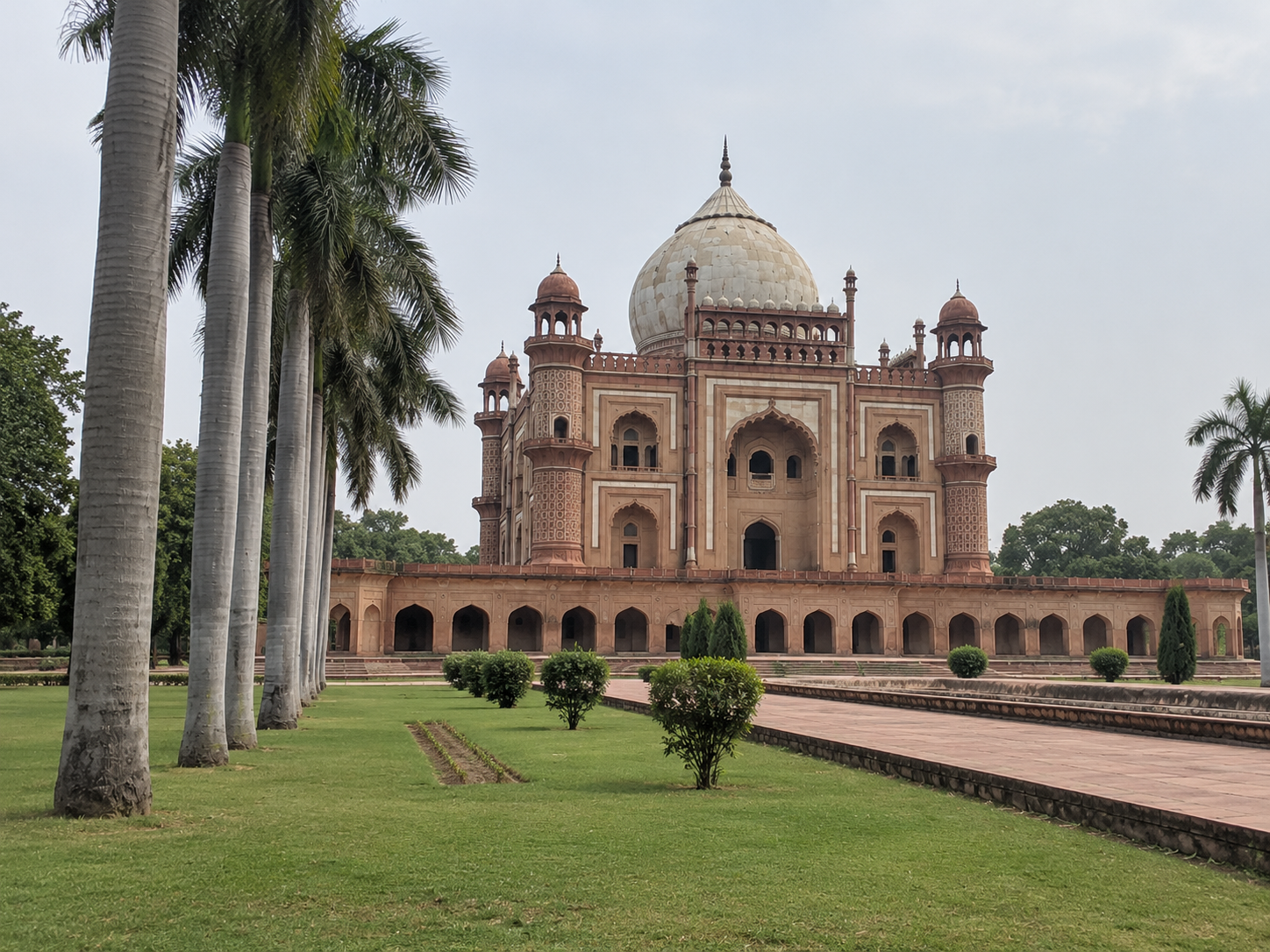
What makes Safdarjung Tomb particularly interesting for photography is its remarkable symmetry. The central dome, towering entrance, repeating arches, and carefully planned garden create strong geometric patterns. While a straight-on photograph captures the grandeur of the monument, moving to one side can reveal a different visual character, with converging lines, overlapping arches, and changing proportions that add depth to the composition.
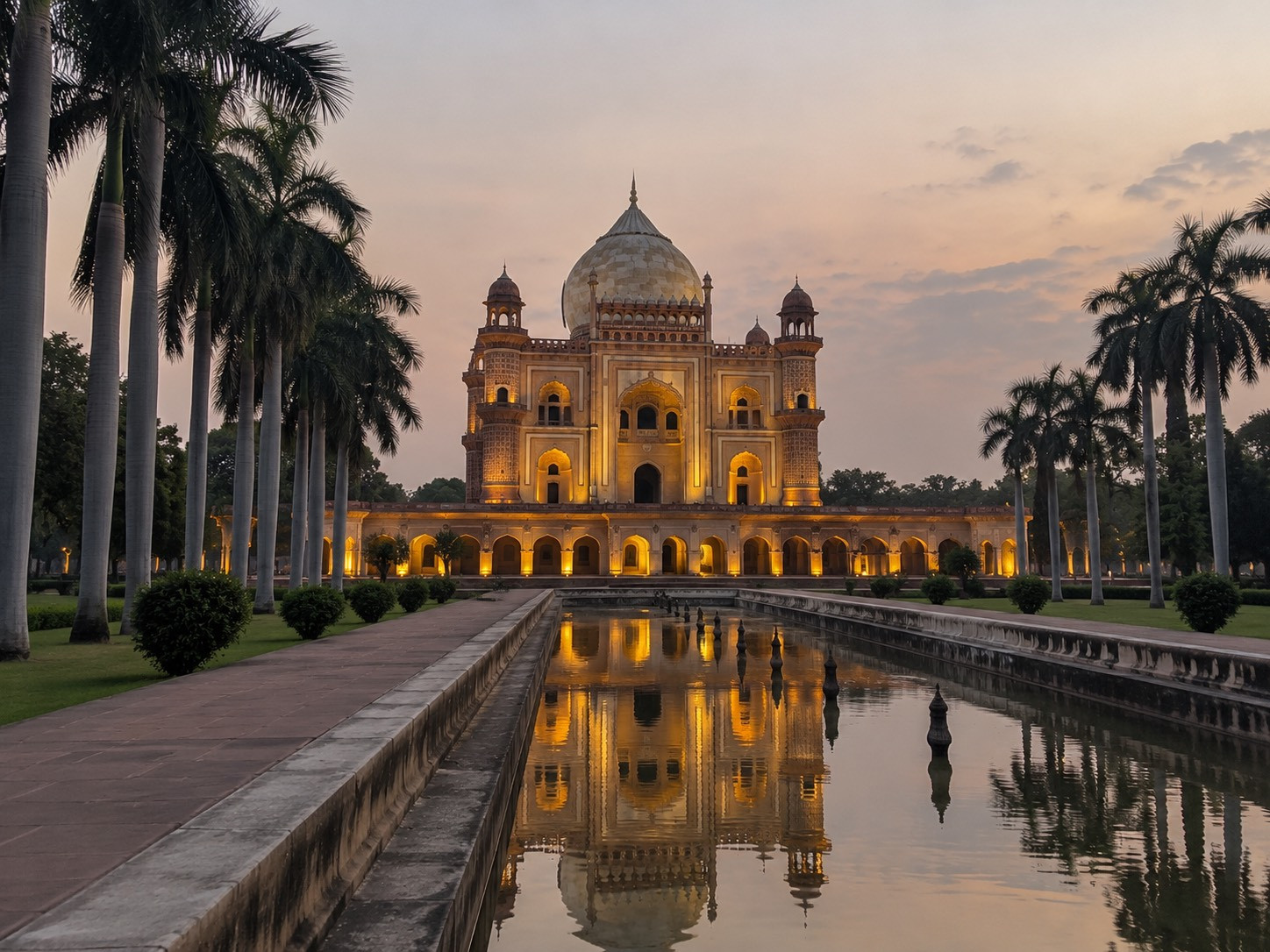
The monument transforms throughout the day as sunlight moves across its red sandstone and buff-coloured stone surfaces. In the morning, softer light can reveal subtle textures and architectural details, while stronger sunlight creates dramatic contrasts between illuminated walls and dark passageways. These variations allow photographers to experiment with shadows, silhouettes, and the interplay between light and darkness. The arched corridors and interior passageways offer another fascinating dimension. By positioning the camera within a dark arch and photographing the bright courtyard beyond, photographers can create natural frames within frames. Repeating arches can also produce a sense of rhythm and perspective, drawing the viewer’s eye towards the centre of the composition.
Beyond its architecture, Safdarjung Tomb offers opportunities for storytelling. A solitary visitor walking through the garden, a person standing beneath an enormous arch, or the silhouette of someone crossing a sunlit passage can introduce a human element into the photograph. These moments communicate scale and create a contrast between the permanence of the monument and the fleeting presence of people. For photographers willing to look beyond conventional postcard views, the real appeal of Safdarjung Tomb lies in discovering unexpected compositions. A low-angle view can emphasise the dome’s imposing presence, an off-centre composition can create visual tension, and a close-up of weathered stone can reveal details that often go unnoticed. Even a small section of the monument can become a compelling photograph when patterns, textures, and light are carefully observed. Ultimately, Safdarjung Tomb is more than a historical landmark; it is a visual study in symmetry, perspective, texture, and time. It challenges photographers to slow down, observe their surroundings, and discover how changing viewpoints can transform a familiar monument into an entirely different photographic experience.
Date / Day : 25th October 2026, Sunday
Time : 7.00 AM
Meeting Point : Entrance : Safdarjung Tomb
Our Workshops are free of cost


Photowalk is open to everyone and one can click from any device.
We also provide free Fujifilm Mirrorless Cameras during the photowalk that can be shared with the group, just bring your SD Card and retrieve the photos once the photowalk is over.
Who can attend
Photowalk is open to all above the Age of 18 Years
Participant can click photos from any camera or mobile phones
If you do not have a camera we will provide you with a mirrorless camera that will be shared with other participants during the photowalk. Please carry a SD Card to so you can take your clicked photos back. We would require a photo ID with address proof to be submitted at the time of the photowalk.
Please note that photo walks are done on foot, so expect lots of walking.
FAQ’s
Is there any Fees for attending the Photowalk ?
All our photowalks across India are free of cost . Government entry fees applies incase of heritage sites participant's need to pay the entry fees for visiting these site.
I do not have a Camera can I participate in the Photowalk ?
Yes surely you can. We provide Fujifilm Mirrorless Cameras for our photowalks that will be shared among the participants. It would be great if you could carry a SD Card, so that you can take back your clicked photographs.
I would like to know more. How can we connect ?
For more details please fill the form in your contact us page. https://photowalksindia.com/contact-us