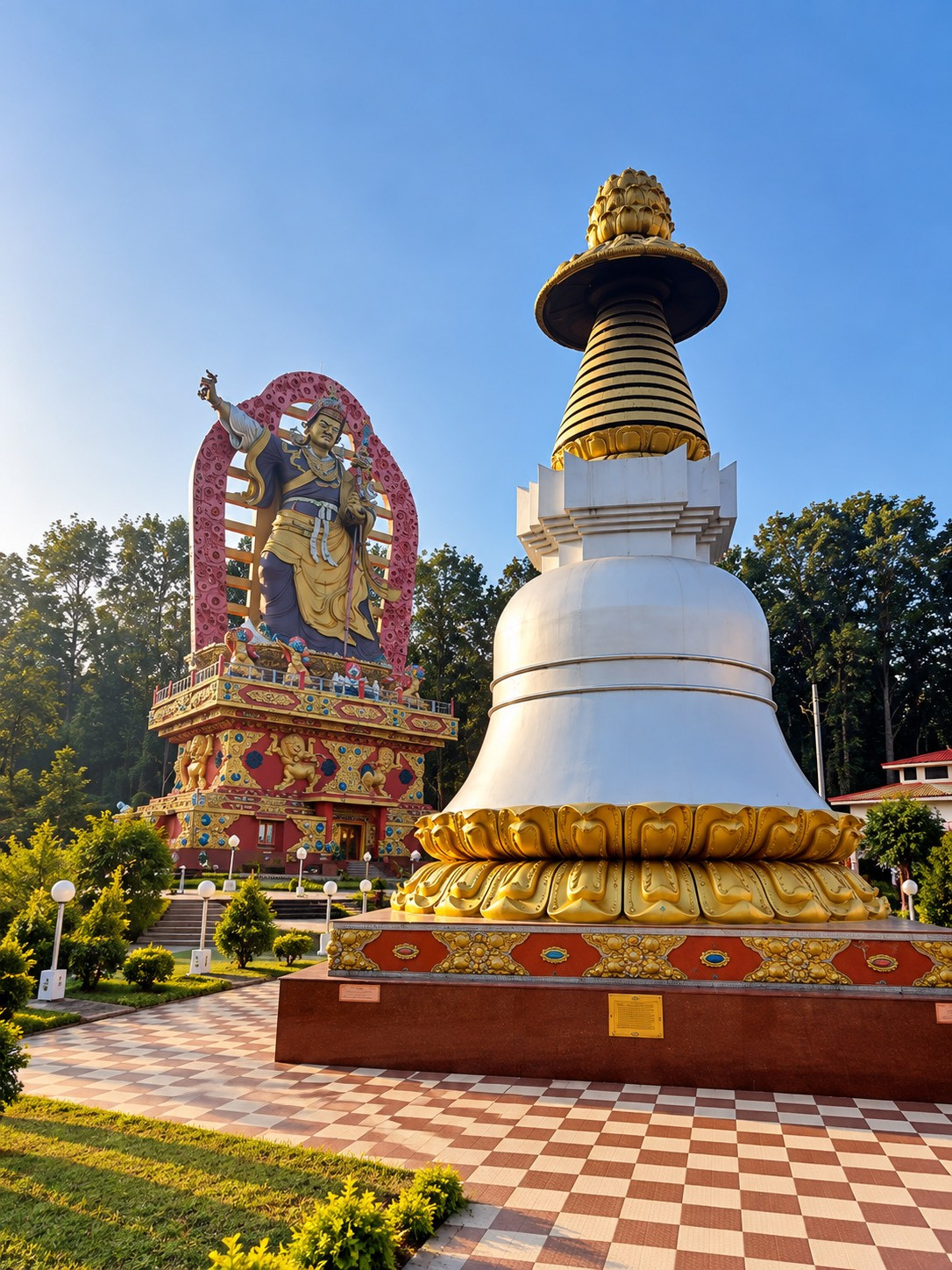
The Budha Temple in Dehradun is a magnificent structure that is not only a place of worship but also a popular spot for photography enthusiasts. The temple is located in the lush green hills of Dehradun, providing a breathtaking backdrop for photographs. The intricate design and architecture of the temple, with its golden dome and intricate carvings, make for stunning visuals. The serene atmosphere and peaceful vibe of the temple make it an ideal location to capture some beautiful shots.
The temple is also surrounded by a beautiful garden, adding more charm to the already picturesque setting. Whether it is the early morning sunlight or the golden hour in the evening, every moment at the Budha Temple in Dehradun is perfect for photography. This temple is a must-visit for anyone looking to capture some stunning photographs and immerse themselves in the tranquil beauty of this divine place.
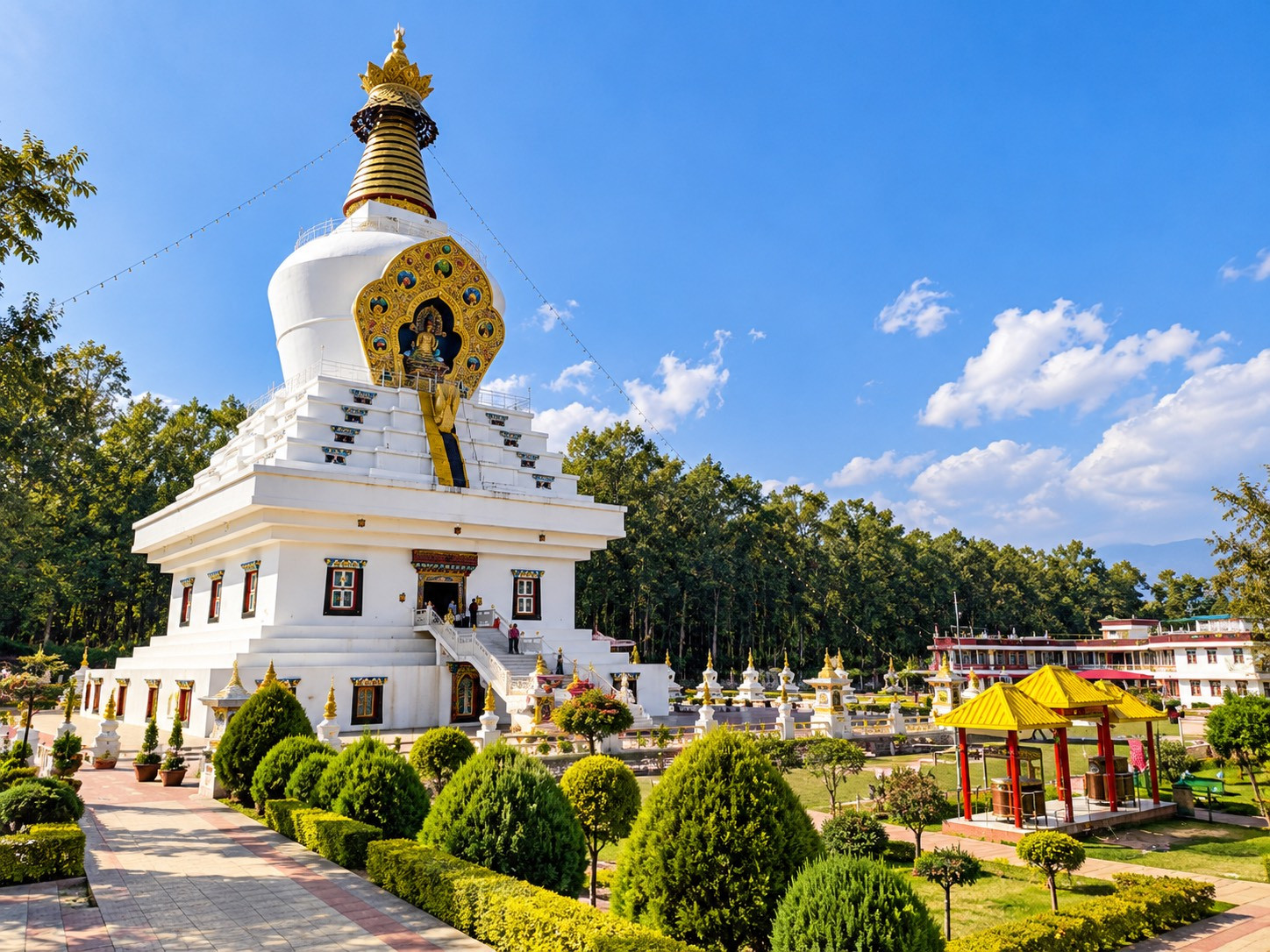
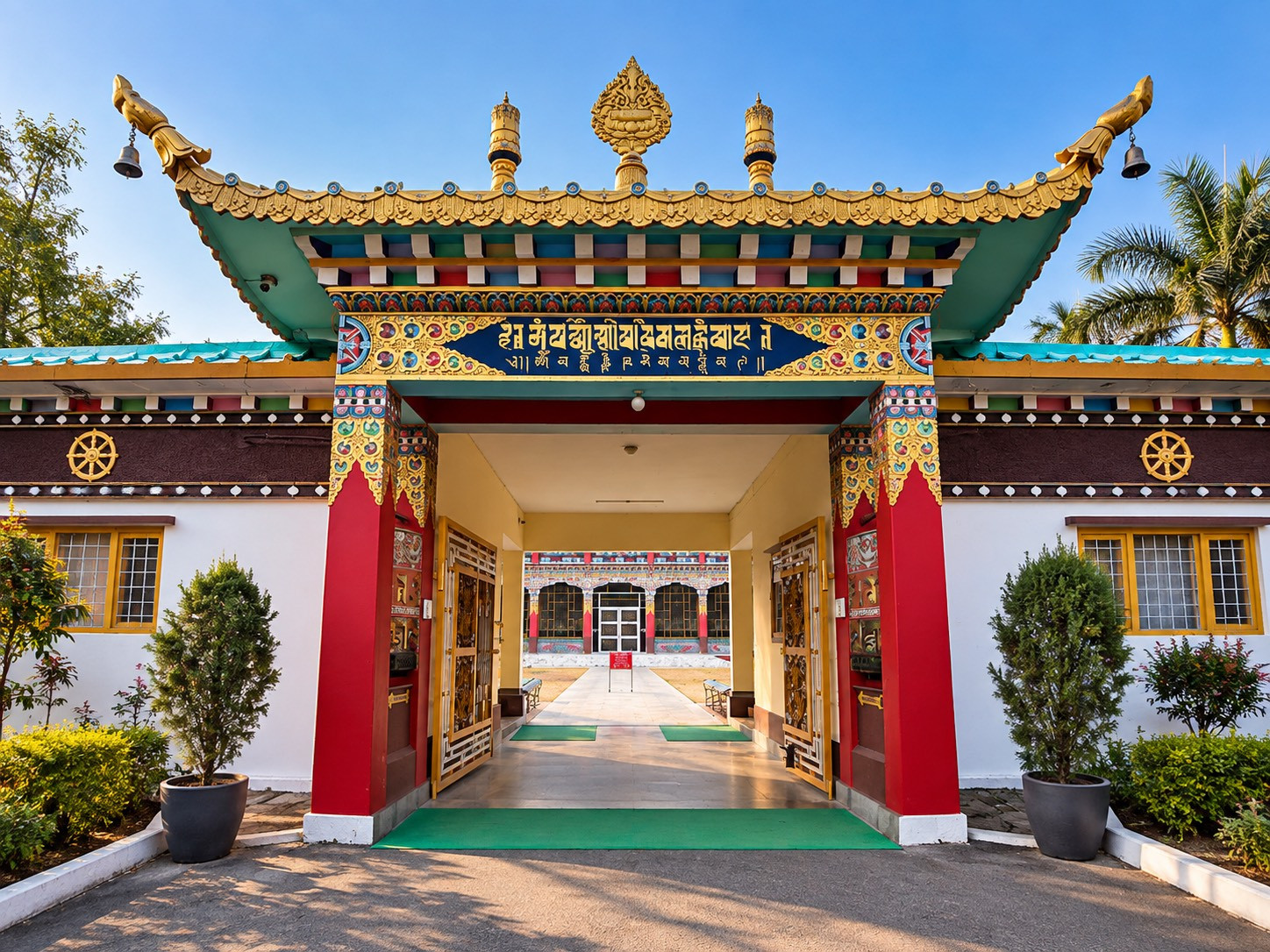
The main entrance is ideal for architectural photography. Standing directly in front of the gate allows you to create a strong symmetrical photograph, with the decorated pillars on both sides and the ornate roof forming a natural frame. Moving slightly to one side can introduce perspective and depth, while a low-angle photograph can make the roof and decorative elements appear much more imposing. The doorway itself can also be used as a frame, with the courtyard and buildings visible through the entrance. The ornamental details provide excellent opportunities for close-up photography. The colourful paintings, gold decorations, Tibetan-style patterns, roof carvings, bells, doors and religious motifs can all become individual subjects. Rather than photographing the entire structure, photographers can concentrate on small sections and look for textures, repeating patterns, colours and interesting shapes. The stupa can be photographed from several different angles. A low viewpoint with the camera pointed slightly upward can emphasize its height against the sky. A wider composition can include the surrounding gardens and buildings, while a tighter telephoto photograph can isolate the golden details and architectural decorations. Shooting when the sunlight falls across the gold elements can create particularly strong highlights and shadows. The landscaped garden gives photographers an opportunity to work with leading lines and geometric compositions. The pathways can guide the viewer’s eye toward the monastery, while the carefully shaped bushes and lawns create layers in the photograph. Getting down closer to ground level can turn the plants into a strong foreground element and give the building more depth. The courtyard is particularly useful for storytelling. Photographers can look for people entering or leaving buildings, walking through the courtyard or interacting with the surroundings. A person placed naturally within the large architectural space can give the photograph a sense of scale. If photography of visitors or religious activities is permitted, candid moments can add a human element to the otherwise architectural environment. The doorways and corridors are excellent for frame-within-a-frame compositions. Standing outside an entrance and photographing toward the courtyard creates multiple layers, with the doorway forming the first frame and the architecture inside creating another. Waiting for a person to naturally walk through the opening can make the photograph more dynamic. The roof architecture is another interesting subject. The upward-curving edges, colourful underside, golden ornaments and decorative symbols can be photographed from below. A wide-angle lens can exaggerate the perspective, while a telephoto lens can isolate individual ornaments against the sky.
The smaller stupas and religious structures in the garden can be used to create balanced compositions. Rather than photographing them individually, try incorporating several structures into one frame, using the foreground structure prominently and allowing the others to recede into the background. This creates depth and repetition. The surrounding trees and greenery can also be used creatively. Photographing the monastery through branches can create a natural frame, while shooting toward the building with the trees on either side can produce a layered composition. During softer morning or evening light, the contrast between the illuminated architecture and darker foliage can become particularly attractive. Do join us for this amazing photowalk.
Date / Day : 26th September 2026, Saturday
Time : 7.00 AM
Meeting Point : MindRolling School
Our Workshops are free of cost


Photowalk is open to everyone and one can click from any device.
We also provide free Fujifilm Mirrorless Cameras during the photowalk that can be shared with the group, just bring your SD Card and retrieve the photos once the photowalk is over.
Who can attend
Photowalk is open to all above the Age of 18 Years
Participant can click photos from any camera or mobile phones
If you do not have a camera we will provide you with a mirrorless camera that will be shared with other participants during the photowalk. Please carry a SD Card to so you can take your clicked photos back. We would require a photo ID with address proof to be submitted at the time of the photowalk.
Please note that photo walks are done on foot, so expect lots of walking.
FAQ’s
Is there any Fees for attending the Photowalk ?
All our photowalks across India are free of cost . Government entry fees applies incase of heritage sites participant's need to pay the entry fees for visiting these site.
I do not have a Camera can I participate in the Photowalk ?
Yes surely you can. We provide Fujifilm Mirrorless Cameras for our photowalks that will be shared among the participants. It would be great if you could carry a SD Card, so that you can take back your clicked photographs.
I would like to know more. How can we connect ?
For more details please fill the form in your contact us page. https://photowalksindia.com/contact-us